Yes. Once the follicle is destroyed, it no longer produces hair. Several sessions are needed, because not all hairs are in their growth phase at the same time and each hair must be treated at the right stage.
Electrolysis in Mont-Tremblant
The only recognized permanent hair removal method, one hair at a time
Electrolysis removes hair permanently by treating each follicle one at a time. It works on all hair types and colours, including the white and blond hair that laser cannot treat.
From $7.50
Online booking
From $7.50
Sessions of 5 to 60 min
Permanent results
Face and body
How electrolysis works
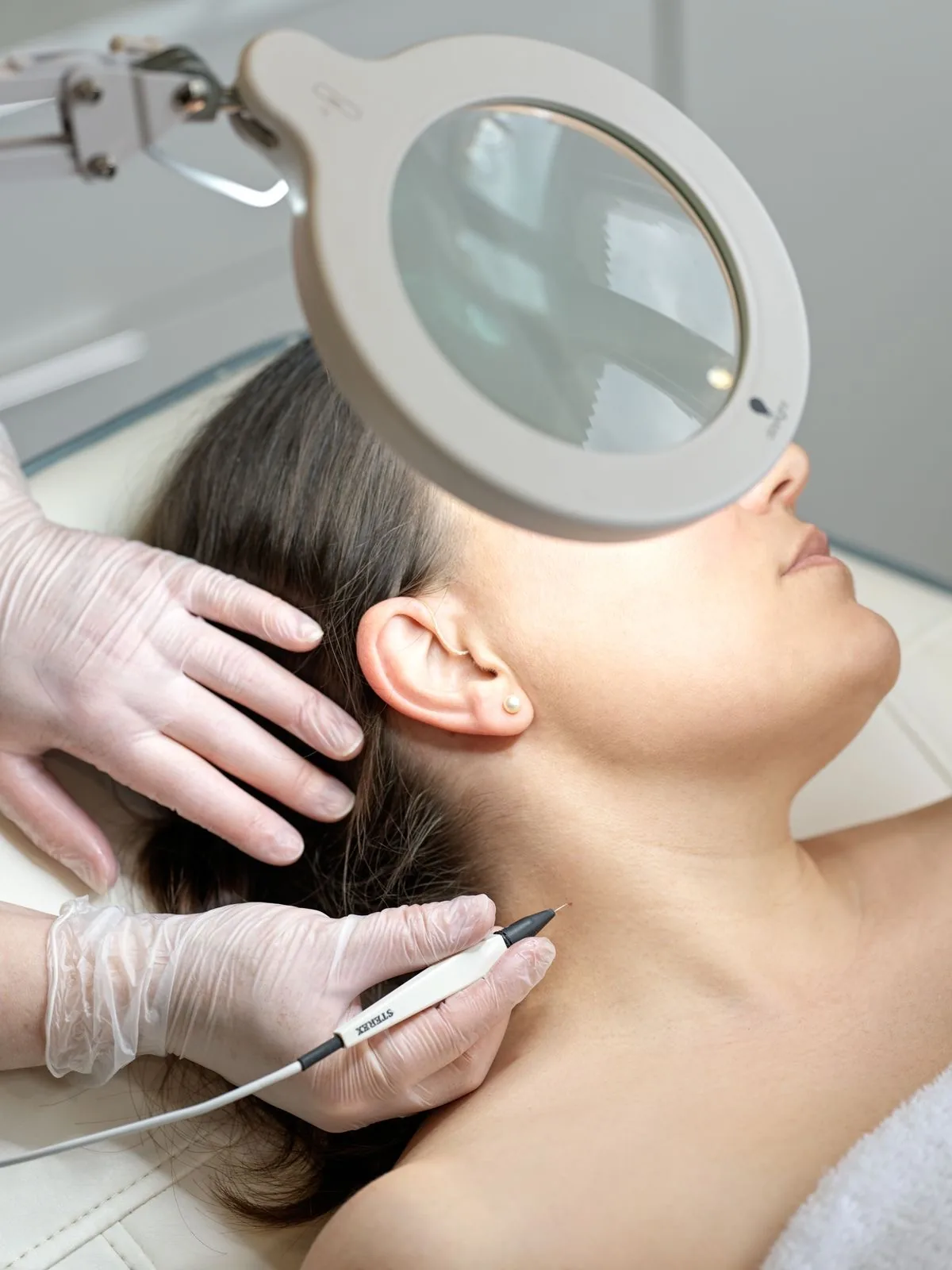
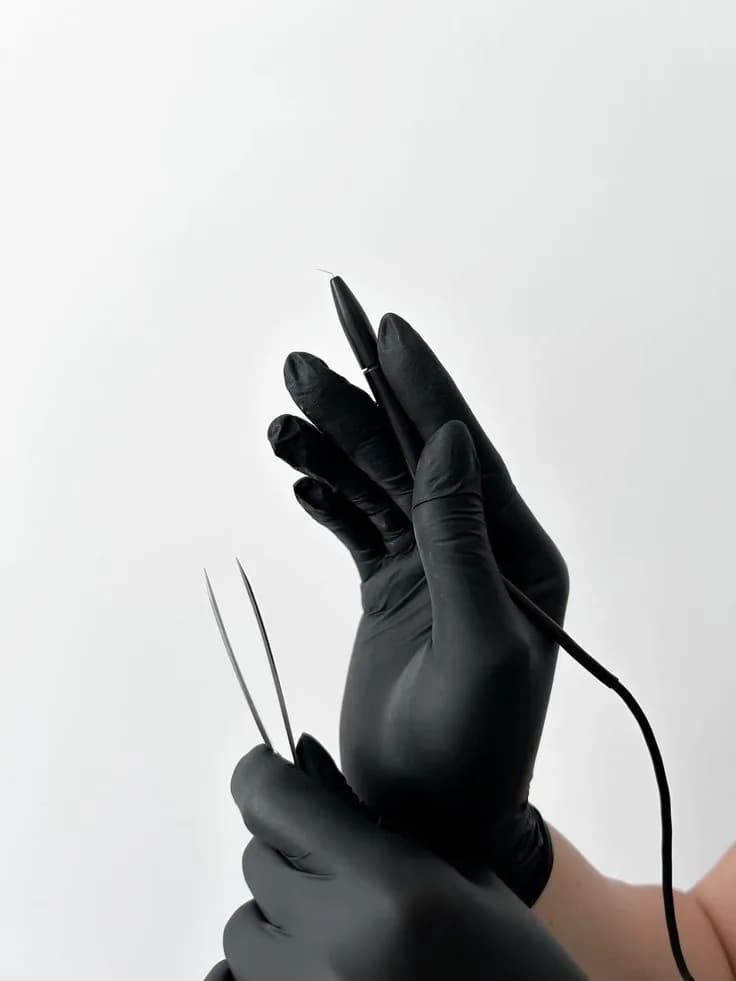
Electrolysis involves inserting a very fine probe into the hair follicle, then applying a light current that destroys the root of the hair. The hair is then lifted out with tweezers, without resistance. Once the follicle is destroyed, it no longer produces hair. That is what makes electrolysis a permanent hair removal method, recognized as such for more than a century.
Electrolysis or laser? Laser targets the melanin in the hair and only works well on dark hair on light skin. Electrolysis acts on the follicle itself: it treats white, grey, blond and red hair, suits every skin tone, and allows precision work on small areas such as the brow line, upper lip or chin.
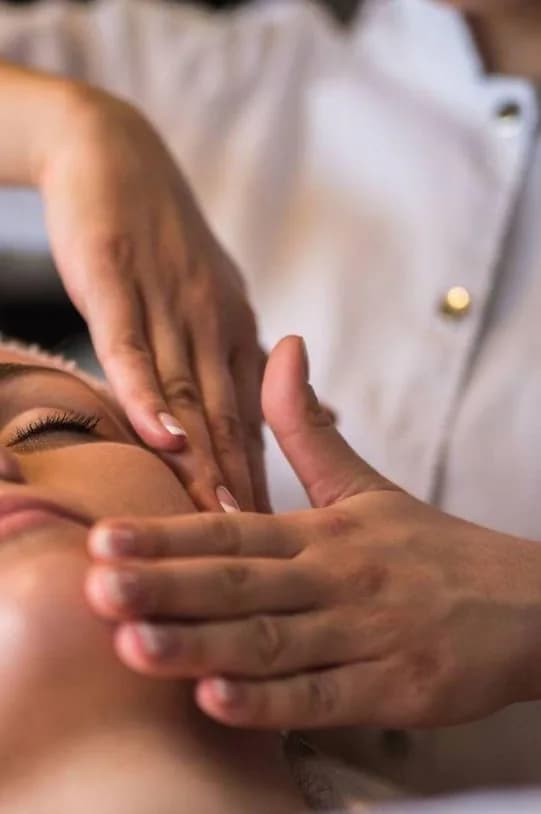
Facial electrolysis is the most common request: chin, upper lip, cheeks, neck or eyebrows. It also suits the body, for example underarms, areolas, the abdomen line or the bikini area. Sessions are booked by duration, from 5 to 60 minutes, depending on the area to treat.
Services and prices
Electrolysis 5 min
Targeted touch-up: a few hairs on the chin, lip or eyebrows.
Electrolysis 10 min
Small facial area in maintenance.
Electrolysis 15 min
Upper lip or chin at the start of treatment.
Electrolysis 30 min
Medium facial area or small body area.
Electrolysis 60 min
Larger areas or several areas in the same session.
Prices in Canadian dollars, as shown on the online booking page. The booked time slot is slightly longer than the treatment time, to allow for preparation and soothing care.
Why choose Éclat Esthétique for your electrolysis

Permanent
Each treated follicle is destroyed: the result is permanent, unlike waxing or shaving.
All hair, all skin tones
White, blond, red or dark hair, light or dark skin: electrolysis works where laser cannot.
Precision
Ideal for small facial areas and for reshaping a brow line.
Trained esthetician
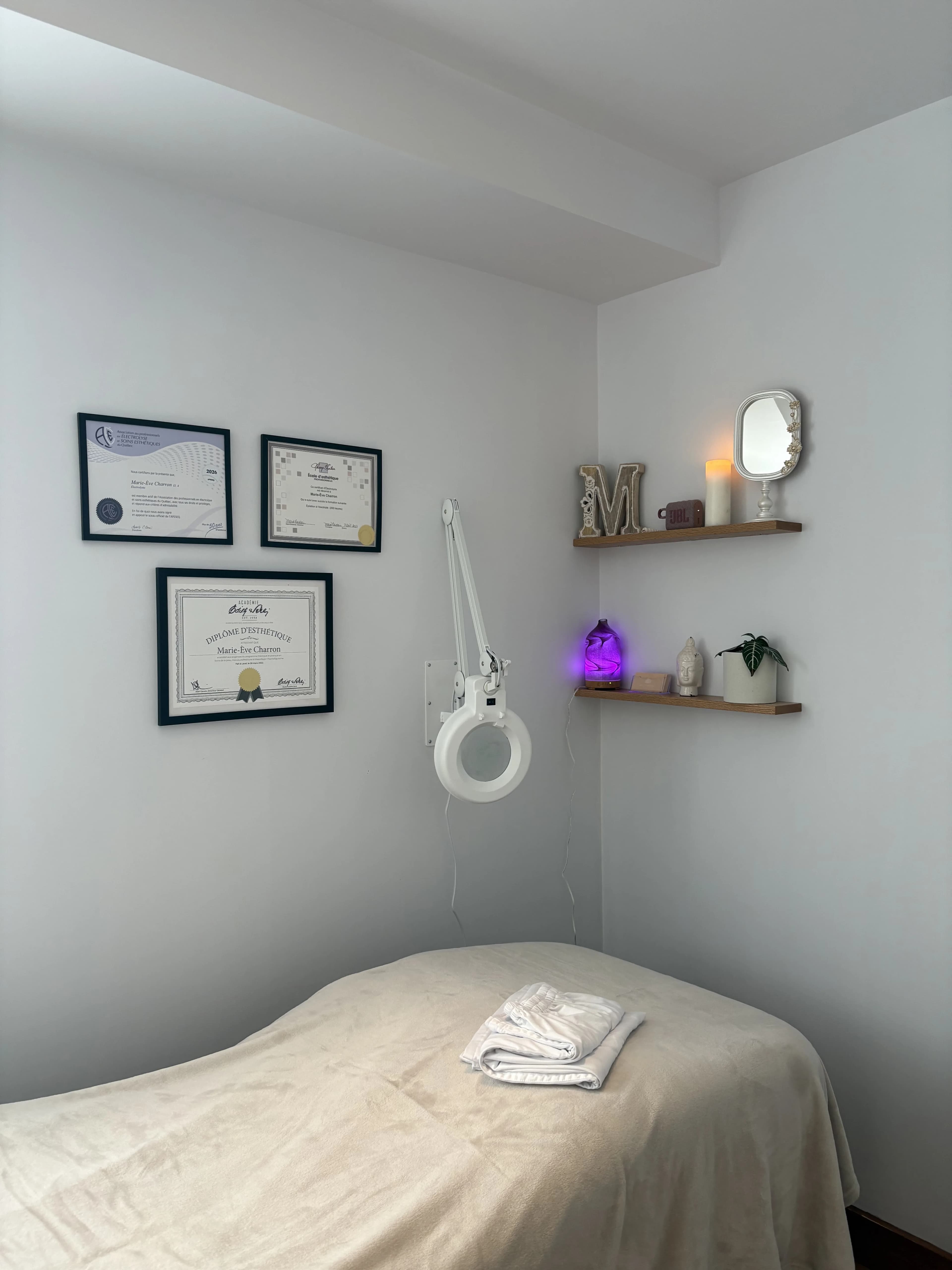
Specialized electrolysis training, strict hygiene protocol and sterile single-use probes.
The only recognized permanent hair removal method, one hair at a time
How your appointment goes
Consultation
We assess the area, the hair type and your expectations, then set up a session plan.
Skin preparation
The area is cleansed and disinfected before treatment.
Hair-by-hair treatment
Under a magnifying lamp, each follicle is treated, then the hair is lifted out without resistance.
Soothing care
A calming product is applied. Slight redness may last a few hours.
Frequently asked questions about electrolysis
Laser is faster on large areas of dark hair. Electrolysis is the only method recognized as permanent and the only one that treats white, blond or red hair on every skin tone. It is also more precise for the face and for finishing touches after laser.
The sensation varies with the area and your sensitivity. Most clients describe a brief warmth or tingling with each hair. The upper lip is more sensitive than the chin or cheeks.
It depends on hair density, hormones and the growth cycle. On average, expect 15 to 30 sessions spread over several months, with shorter and more spaced-out sessions as the hair diminishes.
Performed by a trained esthetician with sterile single-use probes, electrolysis is safe. Redness and small bumps may appear for a few hours. Avoid sun, makeup and touching the area for the following 24 hours.
Do not tweeze or wax for at least two weeks before the session: the hair must be visible to be treated. Shaving is allowed up to two days before.
Sessions are billed by duration: $7.50 for 5 minutes, $15 for 10 minutes, $22.50 for 15 minutes, $45 for 30 minutes and $90 for 60 minutes of treatment.